Published on Friday, 12 June 2026 at 9:00:00 AM
Restoration works have been completed to preserve the historic stone boundary wall at Glen Forrest’s iconic Octagonal Hall, with Shire of Mundaring engaging specialist stonemason Ron from Art in Stone to lead the project.
Built in 1897, the Glen Forrest Hall, originally known as Forrest Hall, has long been a cornerstone of the local community, hosting everything from agricultural displays and dances to meetings and elections. Over time, the site has evolved, and in 1935 local volunteers constructed the now heritage-listed stone wall that frames the property today. Made from granite with cement pillars and once linked by chains, the wall has stood for more than 80 years as a defining feature of the hall and its surroundings.
However, age and environmental impacts have taken their toll. Deterioration of the concrete pillars and internal rusting have led to cracking and structural instability, prompting the need for careful restoration to retain both its integrity and historical value.
With more than 35 years’ experience restoring heritage structures across Australia and the UK, Ron brings a deep respect for traditional craftsmanship and the stories embedded in each project he undertakes.
“Every piece I work on has a story to tell,” Ron said.
“It’s not just about repairing stone. It’s about preserving the history, the people, and the craftsmanship that went into creating it. This wall is a real reflection of community effort and local identity.”
The restoration revealed fascinating insights into the ingenuity of its original builders. During early works, Ron discovered that the concrete pillars had been reinforced using sections of old train tracks – an inventive solution that speaks to the resourcefulness of the 1930s community. He also identified the use of black dolomite within the wall, the same material once used as a railway bed for the Glen Forrest train line, further tying the structure to the area’s transport and industrial heritage.
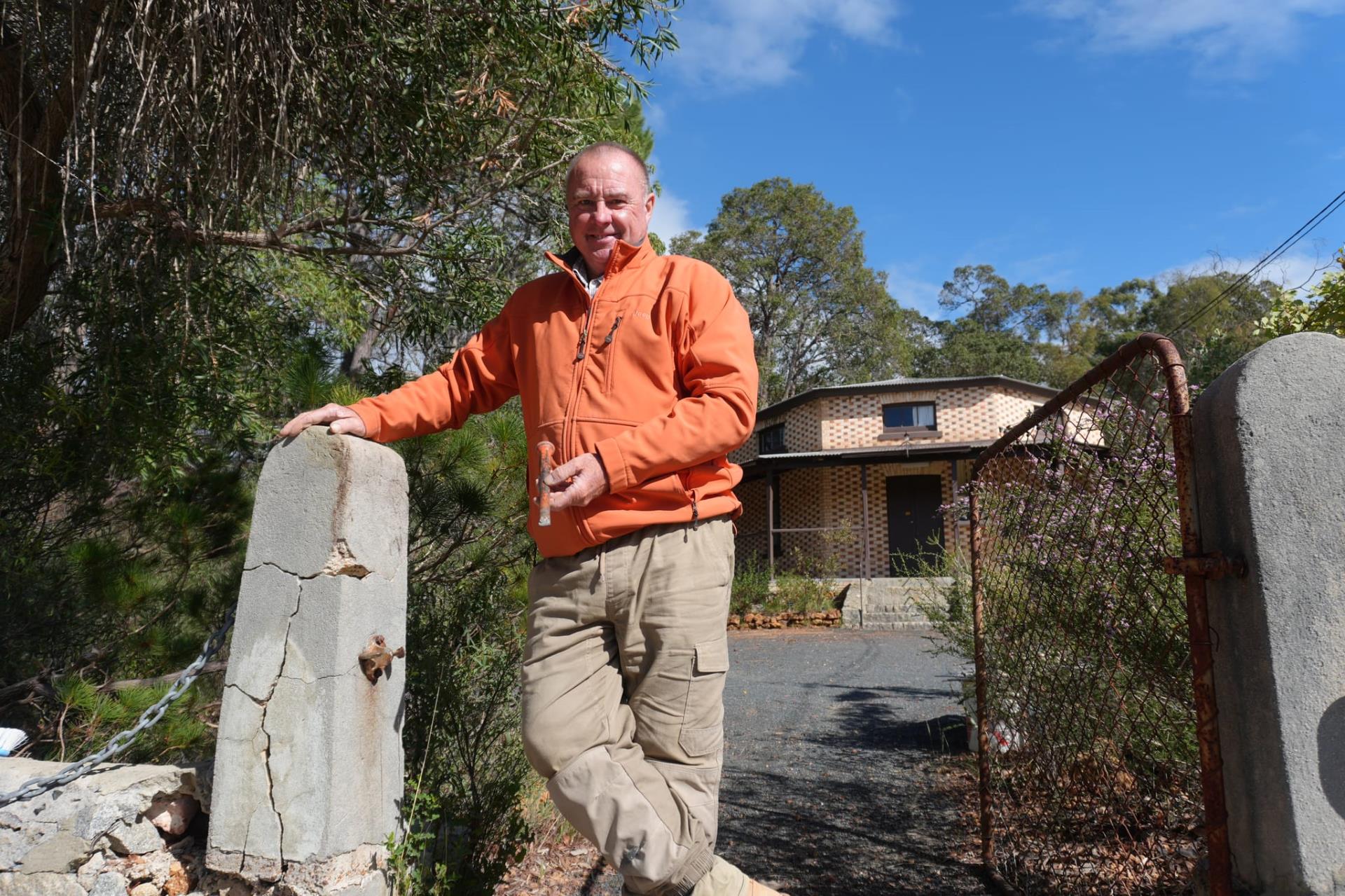
In a remarkable full-circle moment, Ron’s connection to the wall extends beyond the present-day works. Some years ago, he met one of the original stonemasons believed to be involved in its construction, Italian craftsman Johnny Muciarone. Before his passing, Johnny gifted Ron one of his old tungsten chisels, which Ron believes to have been used on the very wall now being restored.
“To be using Johnny’s chisel on this project is incredibly special,” Ron said.
“It’s like continuing his work, carrying forward his legacy. There’s a real sense of continuity in that – it’s something you don’t come across often.”
The restoration process has carefully stabilised the existing structure while retaining as much of the original material as possible, ensuring the wall continues to contribute to the heritage significance of the site.
The works took approximately one month to complete and the restored wall now stands as both a physical and symbolic connection of the past to the present, and the preservation of an important piece of Glen Forrest’s history for generations to come.
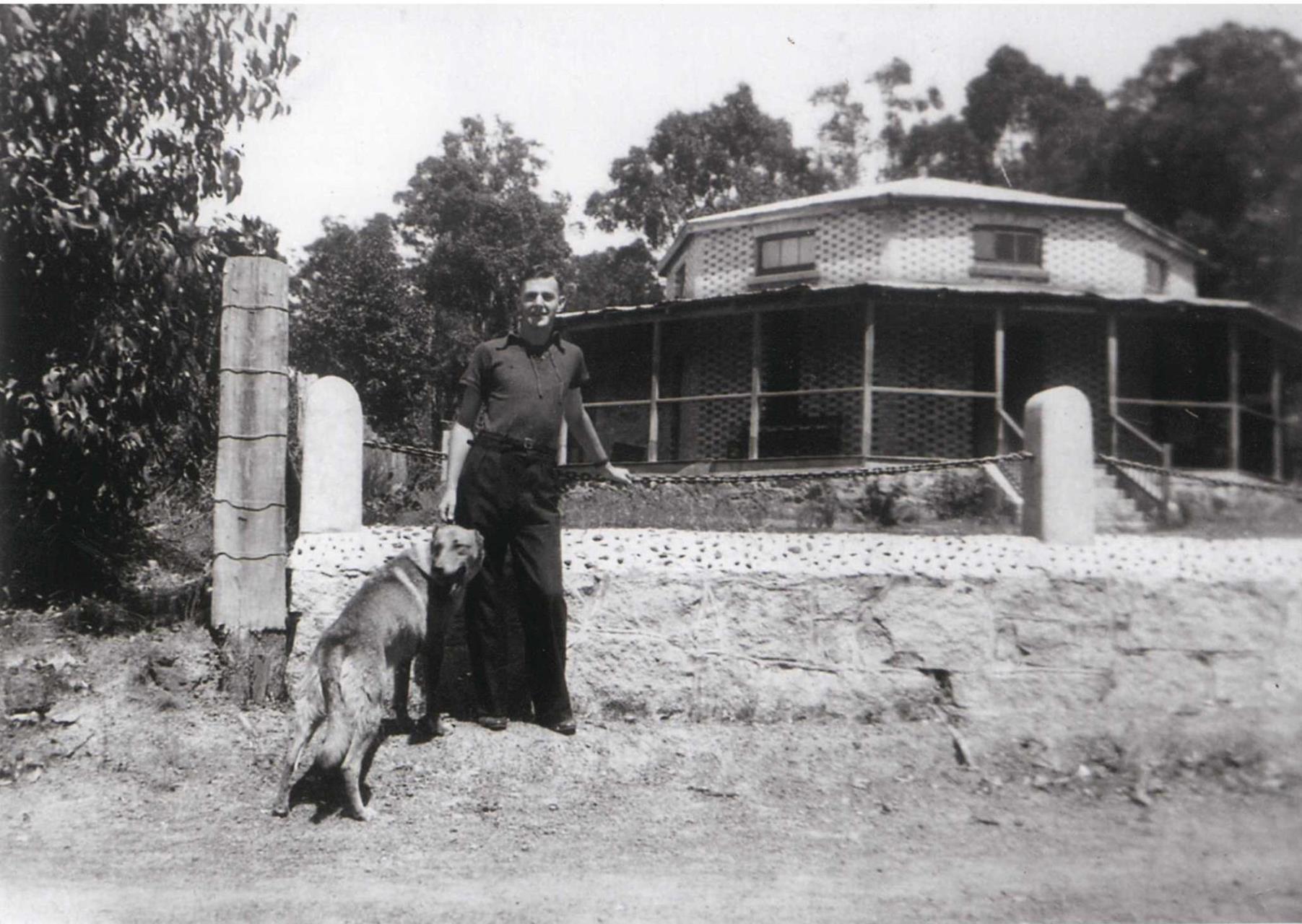
Left Photo: George Blampey (jnr) outside Glen Forrest Octagonal Hall in the early 1940s.
Right Photo: Art In Stone stonemason Ron outside Octagonal Hall, holding original stonemason Johnny Muciarone’s chisel believed to be used in the original construction.
Back to All News